Long before Lewis and Clark ventured west; before the English
established a colony at Jamestown; before Christopher Columbus stumbled
upon the 'new world', the Nez Perce, who called themselves Nimiipuu,
lived in the prairies and river valleys of north Idaho, Montana, Oregon
and Washington. The stories of the
Nez Perce
tell us that they have been part of this landscape since time
immemorial; they have always been here. Nez Perce National
Historical Park commemorates the contributions the Nez Perce have made
and help protect and preserve sites, stories, and artifacts associated
with their history and culture.
The Park encompasses 38 Sites - Scattered
Among Four States
An auto tour of the entire park is more than 1,000 miles in length
through Idaho, Montana, Washington, and Oregon.
Nez Perce National Park Visitors Guide and map.
Lewis and Clark Among the Nez Perce
William Clark first encountered the Nez Perce Nation on
September 20, 1805
" proceeded on through a beautiful Country for three miles
to a small Plain in which I found many Indian lodges... those people
gave us a Small piece of Buffaloe meat, some dried berries & roots in
different states... we ate heartily" Captain Clark
Description of Nez Perce as noted in Captain Clark's Journal
Entry
September 20, 1805
"They call themselves Cho Pun-nish or Pierced Noses; their
dialect appears very different from the Flatheads, darker than the
Flatheads, similiar dress with more beads that are white and blue, brass and
copper in different forms, shells and wear their hair in the same way..."
Friendly to Lewis and Clark
Nez Perce tradition says that they first considered killing
the members of the Corps of Discovery but were persuaded by a woman who
first met white men while a prisoner of Indians in Canada and was kindly
treated by them
"those people were glad to see us, one had formerly been
taken by the Minetares of the north & seen white men..." Captain Clark -
September 21, 1805
May 5, 1806 Captain Lewis - " this is the residence of one
of 4 principal Cheifs of the nation whom the call Neesh - ne, - park -
ke - ook of the cut nose from the circumstance of his nose being cut by
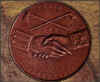
the snake indians with a launce in battle. to this man we gave a
medal * of the small size with the likeness of the President"
*
The mouth of Potlatch River, at Arrow, was the location of the discovery
of a Jefferson medal in 1899. This and the Jefferson medal found
at Palus are the only ones known to have been found west of the
continental divide in a clear context with Indian burials. The
Palus find is no longer at Washington State University but was returned
to the Nez Perce tribe in 1968. The American Numismatic Society,
New York City, still holds the burial find from Arrow. SOURCE:
The Definitive Journals of Lewis and Clark, Vol. 7: From the Pacific to
the Rockies
pgs 213-215
Lewis and Clark Trail maps on this web site were
provided courtesy of the National Park Service
GPO 1991-557-779
Copyright 2011,
LewisAndClarkTrail.com - all rights reserved.
LewisAndClarkTrail.com and "Re-live the Adventure"
are trademarks.
Reproduction of any part of this web site, for any
use, is prohibited without prior approval of
LewisAndClarkTrail.com.






 pgs 213-215